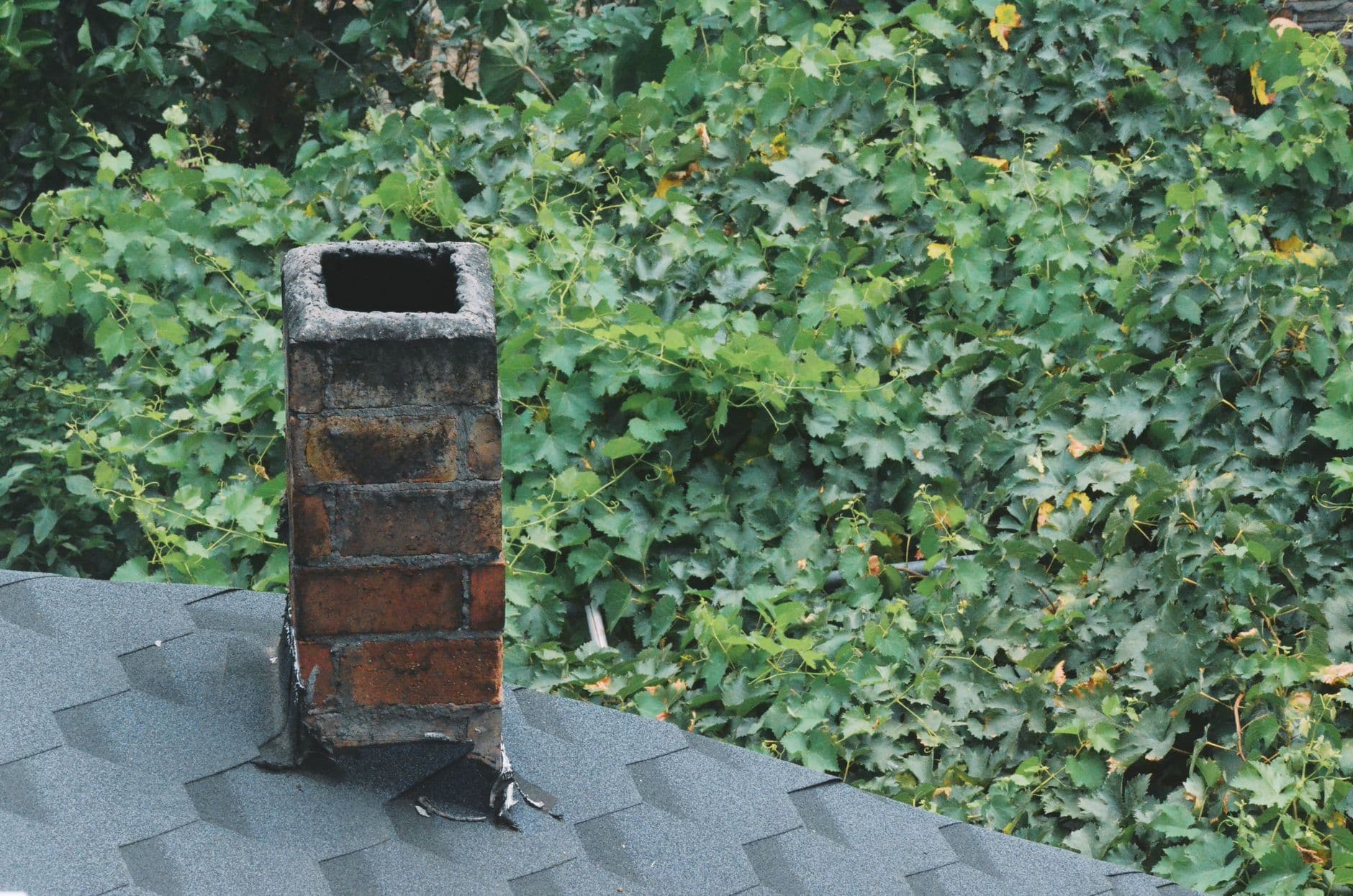
The Roof of the Chimney
Look at a masonry chimney from the street and you see brick. The part that keeps the brick dry is on top, where you usually cannot see it: the crown. It is the slab that covers the top of the chimney around the flue tile, and its whole job is to shed water off the top of the stack and away from the brick. When it fails, rain falls onto the inside of the chimney and soaks down through it, out of sight, for months or years before anything shows in the house.
In our leak investigations around Thousand Oaks, a cracked crown is one of the three causes we find most often, alongside failed flashing and a missing cap. It is also the one most homeowners have never heard of.
Crowns and Washes
Many chimneys were never given a true crown. Instead, the builder troweled a layer of mortar over the top course of brick and sloped it toward the edges. This is properly called a mortar wash, and it has a few weaknesses.
- - It is thin, often an inch or two, so it cracks easily.
- It is made of mortar, which is weaker and more porous than concrete.
- It usually stops at the edge of the brick, so water running off it runs straight down the face of the chimney.
- It is bonded tightly to the flue tile, so when the tile heats up and expands, the wash cracks around it.
A wash may look fine for a few years and then develop a web of fine cracks, followed by a gap around the flue tile and finally pieces breaking away at the corners.
What a Proper Crown Looks Like
A well-built crown is different in each of those respects. It is cast concrete, thick enough to resist cracking. It slopes away from the flue so water runs off. It overhangs the brick on every side by a couple of inches, and the underside of that overhang has a drip edge, a small groove that makes water drip off rather than curling back under and running down the brick. And it is separated from the flue tile by a gap filled with a flexible sealant, sometimes called a bond break, so the tile can expand and contract without cracking the slab.
Why Crowns Crack Here
Our climate is gentler than places with hard freezes, but crowns still crack, and the causes are fairly specific.
Sun and heat. An inland valley like the Conejo gets hot summers, and a dark crown in full sun swings through a big range of temperatures every day. That daily expansion and contraction slowly opens up any weakness.
Heat from the flue. A fire heats the flue tile far more than the crown around it. Without a bond break, the tile pushes against the crown and cracks it.
Earthquakes. Shaking concentrates stress at the top of a chimney, where it is least supported. The 1994 Northridge earthquake cracked a great many crowns and upper chimneys across this region, and some of those cracks were sealed over rather than repaired.
Settling and age. Even a good crown develops hairline cracks over decades. Left alone, water works into them, and the salts it carries widen them.
How Water Gets In Through a Crack
A crack in a crown does not have to be wide to let water in. A hairline crack draws water in by capillary action, the same way a paper towel soaks up a spill. Once inside, the water reaches the brick and mortar below the crown and the gap between the flue tile and the masonry. From there it can soak down the inside of the chimney, staining the chimney breast inside the house, rusting the damper, softening mortar joints and eventually showing on the outside as white efflorescence or spalled brick a few courses below the top.
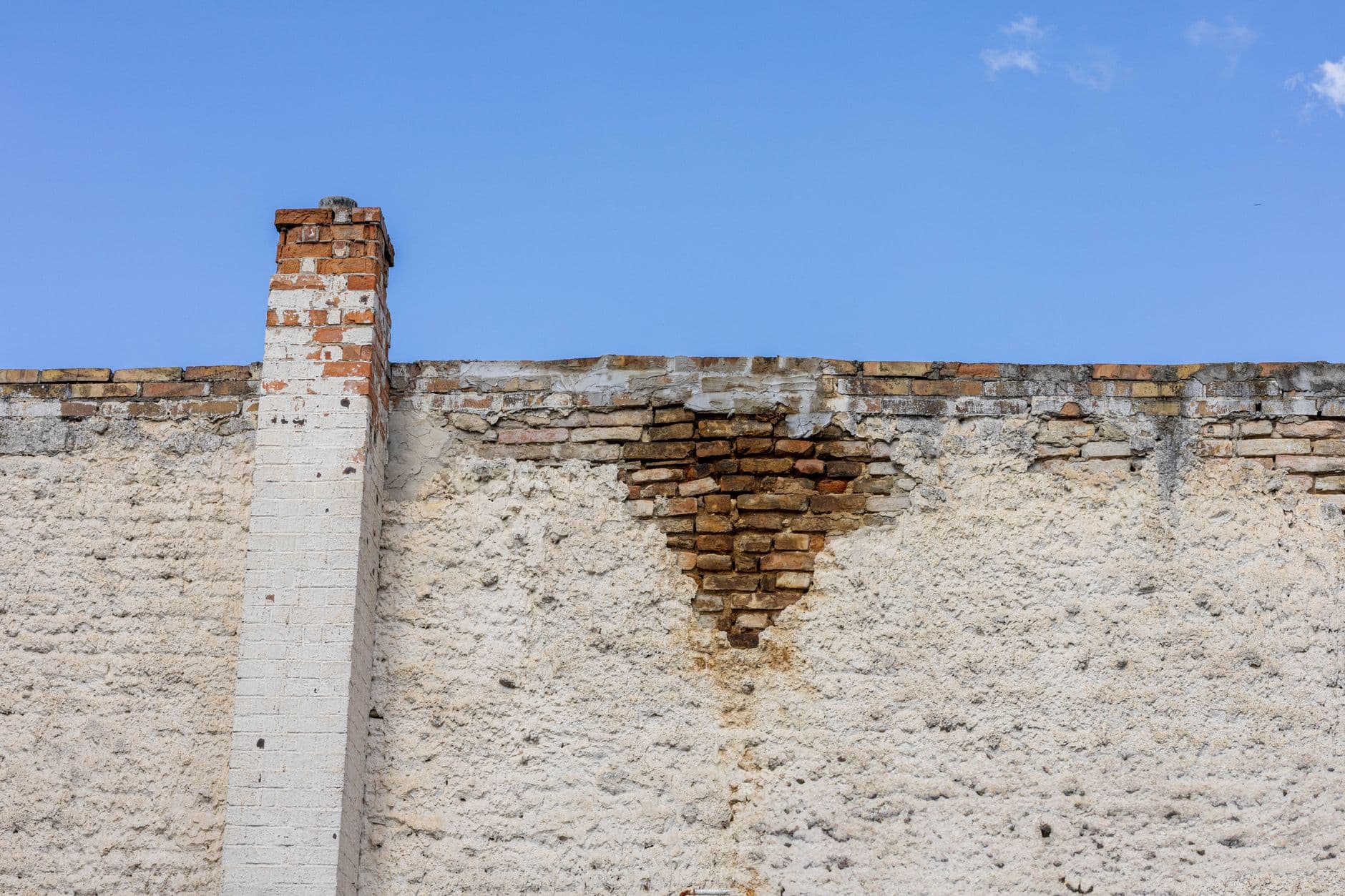
That last point is a useful clue. When the top few courses of brick are flaking, stained or missing mortar and the rest of the chimney looks sound, the crown is usually the source.
Seal, Repair or Replace
What a crown needs depends on its condition.
Hairline surface cracks on an otherwise sound crown can be sealed with a crown sealant made for the purpose, a flexible coating that bridges small cracks and sheds water. It is a sensible step for a crown that is basically well built.
Wider cracks or a failed bond at the flue may be repairable by cutting out the damaged area, rebuilding it and installing a proper bond break around the tile.
A thin mortar wash, a crown broken through, or one with large pieces missing is better replaced. We remove it down to sound brick, form and cast a new concrete crown with the right slope, overhang, drip edge and bond break, and seal it once it has cured.
Each of these is quoted in writing after we have seen the chimney. If a crown is being replaced, it is also a good time to look at the top courses of brick, the flue tile and the cap, since they are all within reach.
The Cap and the Crown Work Together
A cap keeps rain out of the flue. A crown keeps it out of the masonry around the flue. They protect different parts of the chimney, and one does not replace the other. Many outside-mount caps fasten to the crown, which is another reason the crown needs to be sound. If you are adding a cap, we will check the crown first. Our chimney cap installation page explains the options, with installed caps running $155 to $635.
Signs Worth Acting On
You may not be able to see your crown from the ground, but you can watch for its effects: water or rust inside the firebox, staining on the chimney breast inside the house, white deposits or flaking brick near the top of the chimney, and pieces of mortar on the roof or in the firebox. Any of these is a reason to have the top of the chimney looked at. The chimney masonry repair page covers what happens next, and you can reach us through the contact page.
Need Professional Chimney Service?
If something in this article sounds like your chimney, we can trace it from the stain to the source. Contact Alderwood Chimney Services today for expert service throughout the Ventura County service area.